


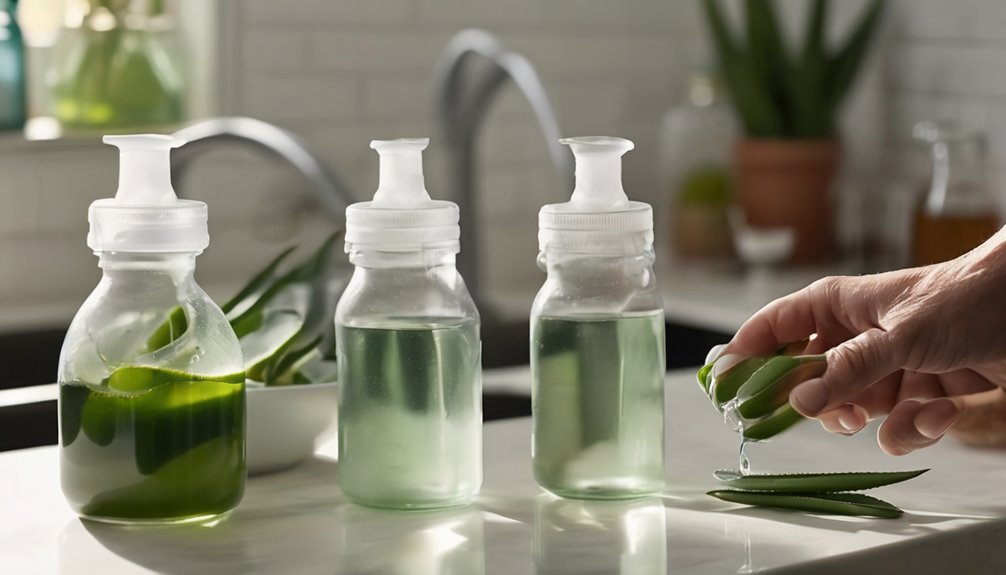
To make hand sanitizer at home, combine at least 60% alcohol (isopropyl or ethanol) with aloe vera gel to maintain skin moisture and prevent dryness. Measure carefully to guarantee proper alcohol concentration, then mix gently in a clean container for a consistent texture. Store your mixture in an airtight bottle away from heat or sunlight to preserve effectiveness. Use it properly by covering all hand surfaces and rubbing until dry. Following these guidelines will improve your understanding of safe preparation and storage methods.
Essential Ingredients for Homemade Hand Sanitizer

Before you begin making hand sanitizer at home, it’s important to understand the essential ingredients you’ll need to guarantee its effectiveness.
The primary component is alcohol, usually isopropyl or ethanol, at a concentration of at least 60%. This secures proper germ-killing action.
Next, you’ll need aloe vera gel to maintain skin moisture and prevent dryness. For scent and additional antimicrobial properties, you can add essential oils, such as tea tree or lavender.
Alternative recipes might include variations in these oils but never reduce the alcohol content, as that compromises sanitizer efficacy.
Knowing these basics secures your homemade sanitizer works safely and well.
Step-by-Step Guide to Mixing Your Hand Sanitizer
Start by measuring out the alcohol, guaranteeing it makes up at least 60% of the total mixture to maintain effectiveness.
Next, add aloe vera gel to balance the solution, preventing skin dryness.
Use a clean container and combine these ingredients carefully.
Employ proper mixing techniques by stirring gently but thoroughly until you achieve a consistent texture.
Avoid whipping or shaking vigorously, which can introduce air bubbles.
These DIY alternatives allow you to control ingredients and proportions precisely.
Once mixed, transfer the hand sanitizer into a clean, sealable bottle.
Following these steps guarantees a safe, effective product made with freedom and responsibility.
Tips for Safe and Effective Use
While homemade hand sanitizer can be effective, you need to use it correctly to guarantee safety and maximize its germ-killing properties. Proper application and controlled usage frequency are essential.
Apply enough sanitizer to cover all hand surfaces, rubbing thoroughly until dry. Avoid overuse, as excessive application can irritate the skin or reduce effectiveness. Remember, hand sanitizer is a supplement, not a substitute, for regular handwashing.
Follow these guidelines for best results:
- Use a coin-sized amount for full coverage
- Rub hands for at least 20 seconds
- Avoid touching your face immediately after application
- Limit use to when soap and water aren’t available
- Store sanitizer safely out of children’s reach
Storage and Shelf Life Considerations
Because homemade hand sanitizer contains volatile ingredients like alcohol, proper storage is crucial to maintain its effectiveness over time.
Use airtight storage containers made of plastic or glass to prevent evaporation and contamination. Keep your sanitizer away from heat, direct sunlight, and open flames, as these factors can degrade the alcohol content.
Typically, homemade sanitizer has a shelf life of about six months, after which its potency may diminish. Label your containers with the preparation date to track freshness.
Frequently Asked Questions
Can Homemade Hand Sanitizer Replace Regular Hand Washing?
You can’t fully replace regular hand washing with homemade sanitizer; it’s an alternative hygiene option but has sanitizer limitations. For true freedom in cleanliness, you need both to keep germs at bay effectively.
Is Homemade Hand Sanitizer Effective Against All Types of Germs?
You can’t rely on homemade hand sanitizer to kill all germ types effectively. Its effectiveness factors vary, so you should use it thoughtfully, ensuring it has at least 60% alcohol to maximize protection and maintain your freedom safely.
Can Children Safely Use Homemade Hand Sanitizer?
You shouldn’t let children use homemade hand sanitizer unsupervised because alcohol exposure can be harmful. Always supervise to guarantee their safety, and consider safer alternatives to protect kids while giving them freedom to stay clean.
What Should I Do if Homemade Sanitizer Causes Skin Irritation?
If your skin reacts, stop using the sanitizer immediately. Rinse with cool water, apply gentle skin care products, and seek irritation relief like aloe vera. If discomfort persists, consult a healthcare professional for freedom from further issues.
How Can I Verify the Alcohol Concentration in My Homemade Sanitizer?
You can verify alcohol concentration by using alcohol testing strips or a digital alcohol meter for accurate concentration measurement. These tools let you confidently guarantee your sanitizer’s effectiveness while maintaining your freedom to create safely.

