


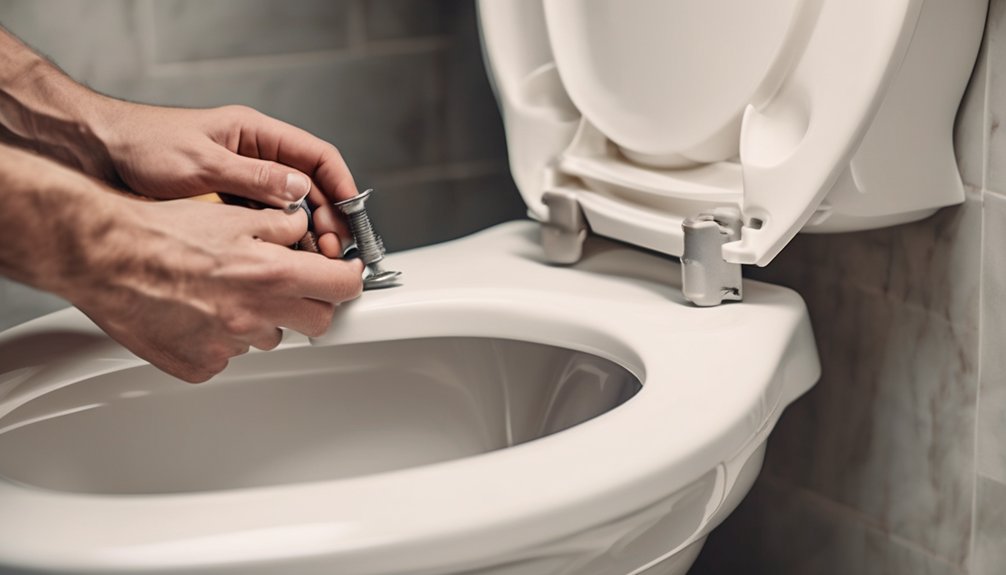
To replace a toilet seat, gather tools like a wrench and screwdriver, then locate and remove the bolts holding the old seat by lifting plastic covers and loosening the nuts. Choose a new seat that matches your toilet’s shape and size, then align it with the holes, inserting bolts and tightening them evenly to avoid damage. Confirm the seat is secure and comfortable before use. Following these steps carefully will prepare you to handle the complete installation process efficiently.
Tools and Materials Needed

Before you begin replacing a toilet seat, gather the necessary tools and materials to complete the task efficiently.
Essential tool types include a wrench or adjustable pliers to loosen bolts, and a screwdriver for removing screws.
Consider material considerations for the new seat, such as plastic for durability and ease of cleaning, or wood for added comfort and style.
You might also want to check for quick-release mechanisms that simplify future maintenance.
Having these tools and materials ready guarantees a smooth process, letting you work independently and confidently without interruptions or delays.
Removing the Old Toilet Seat
Once you have gathered the necessary tools and selected a suitable replacement seat, you can begin removing the old toilet seat.
Start by locating the bolts securing the seat to the toilet; these are usually under plastic covers. Lift or pry off the covers carefully, observing safety precautions to avoid injury.
Use a wrench or screwdriver to loosen the bolts. Common issues include rusted or stuck bolts, which may require penetrating oil or gentle tapping to free.
Remove the seat and bolts completely. Clean the mounting area thoroughly to prepare for the new seat installation, ensuring a smooth fit and secure attachment.
Choosing the Right Replacement Seat
How do you determine the right replacement seat for your toilet? Start by considering toilet seat styles to match your bathroom’s design and comfort preferences.
Next, evaluate seat materials for durability and ease of cleaning. Then, measure your toilet bowl to ascertain a proper fit. Finally, check for additional features that might enhance usability.
Focus on:
- Compatibility with your toilet bowl shape
- Material options like plastic, wood, or cushioned seats
- Style choices including round, elongated, or square designs
- Ease of maintenance and longevity
This approach guarantees you pick a seat that suits your needs effectively.
Installing the New Toilet Seat
After selecting a replacement seat that fits your toilet’s shape and meets your preferences, you can proceed with installation.
Begin by placing the new seat on the toilet bowl, guaranteeing proper seat alignment with the bolt holes. Insert bolts through these holes and secure them underneath with nuts, tightening evenly to avoid uneven pressure.
Use installation tips such as hand-tightening first, then a slight turn with a wrench to prevent cracking. Check the seat’s stability and adjust if necessary.
Following these steps guarantees a secure and comfortable fit, allowing you to enjoy your new toilet seat with confidence.
Frequently Asked Questions
How Often Should I Replace a Toilet Seat?
You should replace your toilet seat every 3-5 years, depending on wear. Watch for replacement signs like cracks, stains, or looseness to maintain comfort and hygiene, ensuring your freedom to enjoy a fresh bathroom experience.
Can I Sanitize a Toilet Seat Instead of Replacing It?
You can sanitize a toilet seat using proper sanitizing methods, but remember, it doesn’t extend the toilet seat lifespan indefinitely. When wear or damage appears, replacing it frees you from hygiene worries and keeps your bathroom fresh.
Are There Toilet Seats Designed for Children?
Yes, you’ll find toilet seats with child friendly designs that make potty training easier. These potty training aids offer comfort and safety, giving your child freedom while you enjoy a stress-free bathroom experience together.
What Are the Best Materials for Durability and Comfort?
You’ll find plastic seats offer durability and easy cleaning, while wood gives warmth and comfort. If you crave extra coziness, padded toilet seats blend softness with freedom, letting you enjoy your bathroom experience fully.
How Do I Fix a Loose Toilet Seat Without Replacing It?
You can fix a loose toilet seat by tightening bolts underneath the seat. If the bolts feel loose, try using washers to create a snug fit, giving you freedom from wobbles without replacing the whole seat.

