


Micron Technology (Nasdaq: MU) is a high-conviction AI memory play with genuine upside, but you are buying it at a price the analyst community does not currently support. At $1,133.99 (last close, June 18, 2026), MU trades roughly 20% above the consensus analyst price target of $945.60. The bull case is real: Micron makes HBM3E memory with supply constrained through the end of 2026 per public guidance, the company’s forward P/E of 9.9x prices in a massive earnings ramp, and it is the only US-headquartered supplier of HBM to Nvidia’s AI GPU stack. The bear case is equally real: earnings are due the week of June 23, SK Hynix issued a demand warning on the same day as this analysis (June 19, 2026), and a beta of 2.17 means Micron swings hard in both directions. Whether MU belongs in your portfolio comes down to your time horizon and your tolerance for a volatile, cyclical business sitting near its 52-week high.
The Bull Case for Micron Stock
Three structural advantages separate Micron from a generic semiconductor bet, and the strongest is one that no amount of Korean fab capacity can replicate.
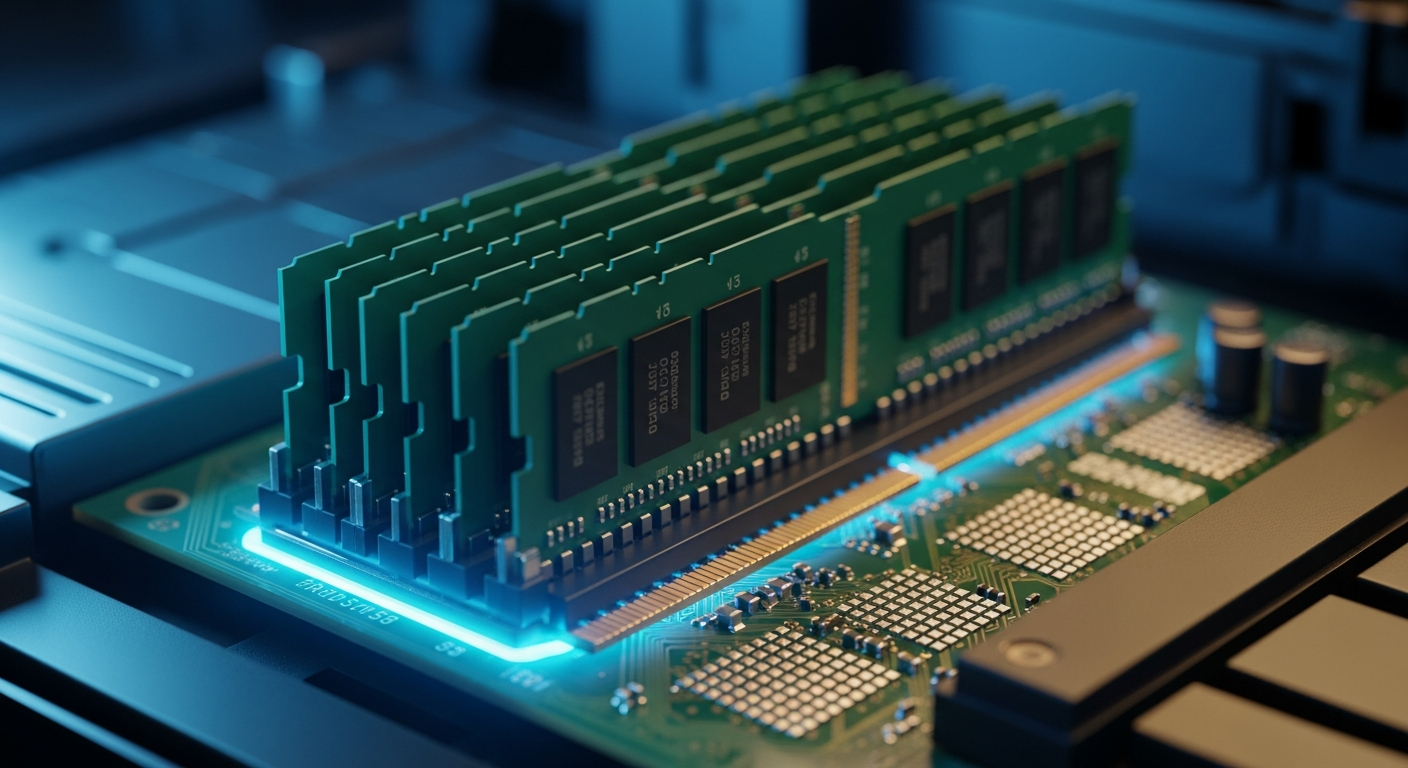
HBM3E supply is constrained, and Micron is one of three companies on the planet that can make it. HBM (High-Bandwidth Memory) is the memory stack bonded directly onto an AI GPU die. Nvidia’s H100, H200, and B200 all run on HBM3E, and hyperscalers cannot build AI training clusters without it. Samsung, SK Hynix, and Micron split this market, but Micron’s US-based production gives it a supply-chain advantage that matters for US government AI contracts. For a deeper breakdown of how HBM works and why it matters for the stock thesis, see our Micron stock forecast and DRAM analysis.
The forward P/E of 9.9x is genuinely low for a company growing revenue at 196% year-over-year. The trailing P/E is 53.4x, which looks expensive until you realize the market is already pricing in a step-function jump in earnings. If Micron earns even half of what the most optimistic models suggest over the next 12 months, the stock looks cheap at today’s price.
NAND pricing is also recovering. Apple publicly flagged unavoidable memory price hikes tied to NAND tightness on June 19, 2026, the same day SK Hynix issued its warning. That Apple statement is not a footnote; it signals that enterprise NAND contracts are repricing upward across the industry, and Micron sells both DRAM and NAND at scale. The combination of HBM scarcity and NAND repricing hitting simultaneously is what makes the bull case unusually concrete right now.
The Bear Case for Micron Stock
The bear case deserves equal weight, and the SK Hynix warning is the most important data point of the week. On June 19, 2026, SK Hynix flagged potential demand softening in the HBM segment, according to Motley Fool’s reporting. SK Hynix is the dominant HBM supplier globally and sees Micron’s customer pipeline before Micron’s own earnings call does. When the market leader warns about demand softness, it is worth taking seriously, especially with Micron’s earnings due the week of June 23.
Analyst consensus is a harder fact to dismiss. The mean price target of $945.60 from the Wall Street community sits about 20% below where Micron trades right now. Analysts update targets after earnings, and if Micron’s guidance disappoints, a convergence toward that $945 level is not an extreme scenario. With a beta of 2.17, a 20% drawdown from current levels is a $226 drop per share on a $1,134 stock. That is the range of motion you are accepting when you buy today.
Memory semiconductors are also historically cyclical. DRAM prices collapsed 40-50% within 12 months in each of the last three down-cycles. The AI narrative is new, but the supply-demand mechanics of DRAM are not. If hyperscaler capex growth decelerates even modestly, the inventory overhang risk returns faster than most investors expect. Micron’s high fixed fab costs mean operating leverage cuts both ways: earnings amplify on the way up and collapse on the way down.
Micron pays no dividend, so there is no income floor while you wait out volatility. That absence matters more than usual when the stock is trading near an all-time high with a near-term catalyst that could go either direction.
What the Numbers Say
The core financial picture as of the most recent data (June 18-19, 2026, sourced from yfinance):
- Price: $1,133.99 (near 52-week high of $1,149.43)
- Market cap: $1.28 trillion
- Revenue (TTM): $58.1 billion, up 196% year-over-year
- Trailing P/E: 53.4x; Forward P/E: 9.9x
- Gross margin: 58.4%; Operating margin: 67.6%
- Free cash flow (TTM): $2.89 billion (FCF yield: 0.23%)
- Debt/Equity: 14.9% (conservative)
- Beta: 2.17
- Analyst mean price target: $945.60 (approximately 20% below current price)
- Dividend: none
The gross margin of 58.4% and operating margin of 67.6% are exceptional for any semiconductor manufacturer. The FCF yield of 0.23% reflects a stock price that has run far ahead of current cash generation, though that gap should close if the earnings ramp materializes. Debt at under 15% debt-to-equity is conservative, meaning a downturn would not threaten the balance sheet even in a severe DRAM down-cycle.
The single most important number here is the forward P/E of 9.9x. That multiple implies the market expects Micron’s earnings to grow roughly 5x from trailing levels within the next year. A very specific bet on a very specific outcome. If HBM pricing holds and NAND ASPs keep rising, it is achievable. If either wobbles, the stock reprices toward trailing earnings multiples, which points significantly lower.
For context on how Micron compares across the broader AI storage and memory sector, the best AI memory and infrastructure stocks guide covers the full competitive picture including SanDisk, Marvell, and Seagate, with side-by-side fundamentals for all ten names.
What Analysts Say
Wall Street’s mean target of $945.60 signals that the analyst community, in aggregate, believes the stock has already priced in the near-term upside. That does not mean analysts are bearish on Micron’s fundamentals; it means the 2026 catalyst cycle is already in the price, and the market is now pricing the next cycle.
The earnings report due the week of June 23, 2026 is described by InvestorsHub as a “key test for the AI-driven market rally.” That framing tells you what is at stake: Micron has become a proxy for whether the AI infrastructure spend cycle is real and durable. A beat with strong HBM guidance could push MU through its 52-week high of $1,149.43 and force analyst target upgrades across the sector. A miss, with SK Hynix’s warning fresh in memory, could trigger a gap-down of 15% or more.
The MACD reading as of June 18 shows a slight bearish cross (line 86.9 vs. signal 91.7), suggesting the stock is consolidating rather than accelerating into earnings. RSI at 57 is neutral, not overbought, which leaves room for a move in either direction. Neither technical signal gives a strong directional read ahead of the print.
Verdict: High-Conviction Play, Not a Safe One
Micron makes sense as a position if you believe the AI server buildout remains on its current trajectory through late 2026 and you can stomach a volatile stock sitting near its all-time high with an imminent earnings catalyst. The HBM thesis is structurally sound, the balance sheet is clean, and a forward P/E of 9.9x is legitimately attractive if the earnings ramp materializes as modeled.
It does not make sense as a buy-and-forget position. The SK Hynix warning is not background noise. The 20% gap between current price and analyst consensus is material and not easily dismissed. A beta of 2.17 means the stock will move more than twice as much as the market on any given day, in either direction, and with earnings next week the binary outcome risk is elevated.
If you want Micron exposure with less volatility, the earnings event next week offers an option worth considering: wait for the print. A positive result with raised guidance validates the bull case at slightly lower risk. A negative result might create a better entry at prices closer to what analysts already think the stock is worth.
For investors who want AI storage exposure with more downside protection, consider adding a lower-beta complementary position alongside any MU allocation. Everpure (formerly Pure Storage, NYSE: P) offers a different angle on the same AI data center buildout with a more predictable subscription revenue model, at a lower beta than Micron’s 2.17.
This analysis is for informational purposes only and does not constitute investment or financial advice. All figures sourced from yfinance as of June 18-19, 2026. Investing in stocks involves risk, including the possible loss of principal. This analysis does not cover options strategies, tax implications, or position sizing. Do your own research and consult a licensed financial advisor before making any investment decision.
Frequently Asked Questions
Is Micron stock a good investment right now?
Micron is a solid long-term AI memory thesis, but it trades roughly 20% above the analyst mean price target of $945.60 as of June 2026, with earnings due the week of June 23. The risk/reward is asymmetric near the 52-week high. The bull case rests on HBM3E demand and a 9.9x forward P/E; the bear case centers on the SK Hynix demand warning, high beta of 2.17, and no dividend cushion during any pullback.
Is MU stock a buy or sell for 2026?
Most Wall Street analysts hold rather than buy at current prices. The consensus price target of $945.60 implies roughly 20% downside from the June 2026 price of $1,133.99. Micron remains a strong fundamental story, but a better entry may emerge after the June 23 earnings report, depending on guidance around HBM pricing and whether SK Hynix’s demand warning proves accurate.
What is the Micron stock price target?
The analyst mean price target for Micron (MU) is $945.60 as of June 19, 2026, sourced from yfinance. This is approximately 20% below the current trading price of $1,133.99. Individual analyst targets vary and are updated after each earnings release. Targets above $945.60 exist, but the consensus sits below current price.
Is Micron better than Samsung for AI memory?
Micron is the only US-headquartered HBM supplier, which gives it an advantage for AI projects requiring domestic supply chains. Samsung and SK Hynix hold larger overall HBM market share globally. For AI training GPU memory (HBM3E specifically), all three companies compete, but Micron’s US fab status is a meaningful differentiator for defense and government AI contracts where supply chain origin matters.
Does Micron pay a dividend?
No. As of June 2026, Micron pays no dividend. The company prioritizes capital reinvestment into fab capacity and HBM production over shareholder income distributions. For investors seeking yield alongside AI memory exposure, Micron is not the right instrument. Look at lower-beta names in the sector if income matters to your strategy.

