


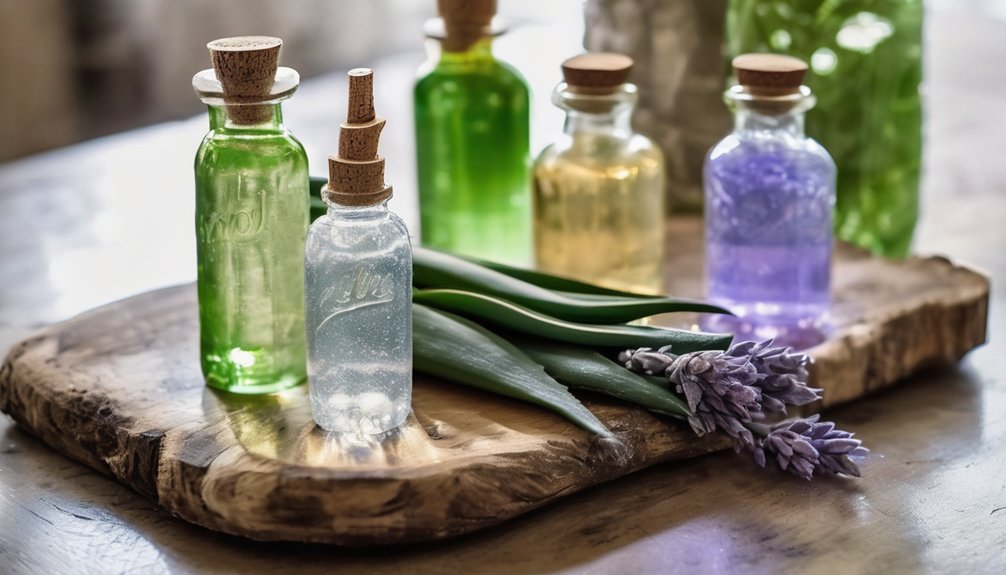
To make DIY hand sanitizer, combine at least 60% isopropyl or ethanol alcohol with aloe vera gel to soothe your skin. Add glycerin or another moisturizer to prevent dryness and distilled water to adjust consistency. Mix these ingredients thoroughly and store the solution in a clean, sealed container away from heat and sunlight. Apply to dry hands, rubbing until fully dry for effectiveness. Following these guidelines guarantees safety and skin care; more details can help you perfect your formula.
Essential Ingredients for Homemade Hand Sanitizer

Although many recipes exist for homemade hand sanitizer, understanding the essential ingredients is crucial to guarantee effectiveness and safety. You need at least 60% alcohol, typically from isopropyl or ethanol, to guarantee proper germ-killing power.
While natural alternatives like aloe vera gel provide soothing properties, they don’t replace alcohol’s disinfecting role. Glycerin or similar moisturizers help prevent skin dryness caused by frequent use. Water, preferably distilled, adjusts the mixture’s consistency.
Focusing on ingredient effectiveness guarantees your homemade sanitizer meets safety standards. This knowledge lets you create a reliable product without compromising your desire for freedom and control over what you use.
Step-by-Step Preparation Guide
Now that you understand which ingredients are necessary for an effective homemade hand sanitizer, you can begin the preparation process.
First, measure the alcohol and aloe vera gel accurately to guarantee proper sanitizer consistency. Mix them gently until fully combined.
Next, add essential oils if you want scent options, stirring well to distribute the fragrance evenly. Avoid over-thickening; the sanitizer should be fluid enough to spread easily on your hands but not runny.
Finally, transfer the mixture into a clean container with a pump or squeeze top for convenient use. Store it in a cool, dry place away from direct sunlight.
Tips for Safe and Effective Use
When using homemade hand sanitizer, you should apply it to dry hands and rub thoroughly, covering all surfaces until your skin feels dry.
Proper application guarantees the sanitizer effectively reduces microbes. Avoid wiping or rinsing your hands immediately after use, as this diminishes its effectiveness.
Follow storage guidelines carefully: keep your sanitizer in a cool, dry place away from direct sunlight and heat sources.
Seal containers tightly to prevent evaporation and contamination. Store out of reach of children to avoid accidental ingestion.
Adhering to these tips helps maintain your sanitizer’s potency and supports safe, effective personal hygiene practices.
Frequently Asked Questions
How Long Does Homemade Hand Sanitizer Last Before Expiring?
Your homemade hand sanitizer usually lasts about six months. Watch for expiration indicators like changes in smell or texture. Keep it in a cool, dark place to maintain its potency and enjoy your freedom to stay safe.
Can I Add Fragrance Oils to My DIY Hand Sanitizer?
You can add fragrance oils, but prioritize fragrance safety by choosing skin-safe oils like lavender or tea tree. Avoid heavy or synthetic types, and test a small amount first to keep your sanitizer effective and irritation-free.
Is Homemade Hand Sanitizer Effective Against All Types of Germs?
Homemade hand sanitizer’s effectiveness varies by germ types; it generally works well against many viruses but isn’t foolproof against all bacteria or spores. You should compare its effectiveness to commercial options before relying completely.
What Should I Do if the Sanitizer Causes Skin Irritation?
If your sanitizer causes irritation, stop using it immediately. Focus on gentle skin care and try irritation remedies like aloe vera or moisturizer. Listen to your skin’s freedom—it deserves soothing, not discomfort.
Can Children Safely Use Homemade Hand Sanitizer?
You shouldn’t let young children use homemade sanitizer unsupervised—children’s safety is key. Follow sanitizer guidelines closely, ensuring it’s used properly to avoid ingestion or skin irritation, keeping their freedom to stay clean and safe intact.

